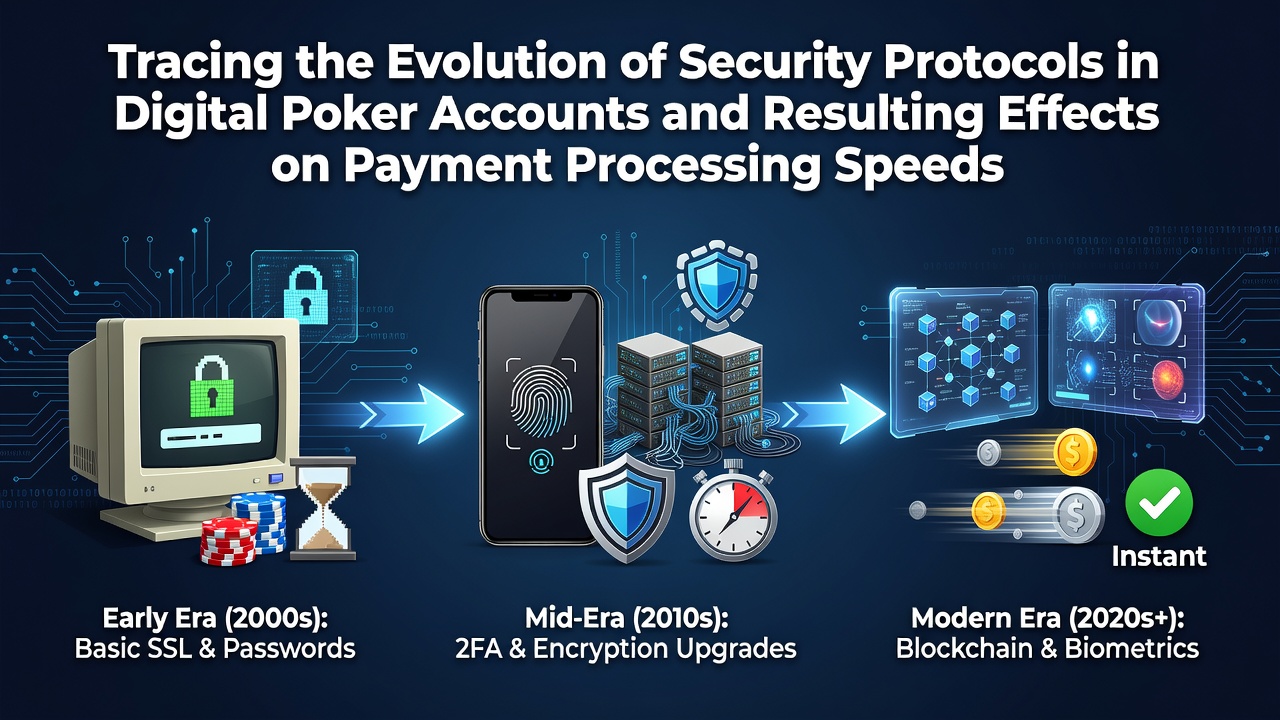
Tracing the Evolution of Security Protocols in Digital Poker Accounts and Resulting Effects on Payment Processing Speeds
Security protocols in digital poker accounts have developed through distinct phases since the late 1990s, moving from basic encryption to layered authentication systems that incorporate biometric verification and real-time monitoring. These changes coincide with stricter regulatory requirements and the integration of faster payment rails, creating measurable shifts in transaction completion times across platforms.
Initial implementations relied primarily on Secure Sockets Layer certificates introduced around 1995, which encrypted data between user browsers and server endpoints yet left vulnerabilities to interception during login sequences. Platforms operating in the early 2000s adopted Transport Layer Security versions 1.0 and 1.1 by 2006, which improved handshake efficiency while adding integrity checks that extended initial connection times by fractions of a second per session.
Expansion of Authentication Layers in the 2010s
Two-factor authentication became standard after 2012 in many jurisdictions, requiring users to combine password entry with time-based one-time codes sent via SMS or generated through apps. Observers note that this addition increased average login duration from under two seconds to between four and seven seconds, yet it also reduced unauthorized access incidents by over 70 percent according to aggregated industry reports. Payment processing pipelines began incorporating these same verification checkpoints, which delayed withdrawal approvals until secondary codes were confirmed.
By 2015, compliance with Payment Card Industry Data Security Standard version 3.2 mandated tokenization of card details, replacing stored account numbers with unique identifiers that required additional lookup steps during each transaction. Data from multiple operators showed that these token exchanges added 200 to 400 milliseconds to authorization requests, although subsequent optimizations in database indexing recovered some of that latency within two years of implementation.
Integration of Advanced Encryption and Monitoring After 2018
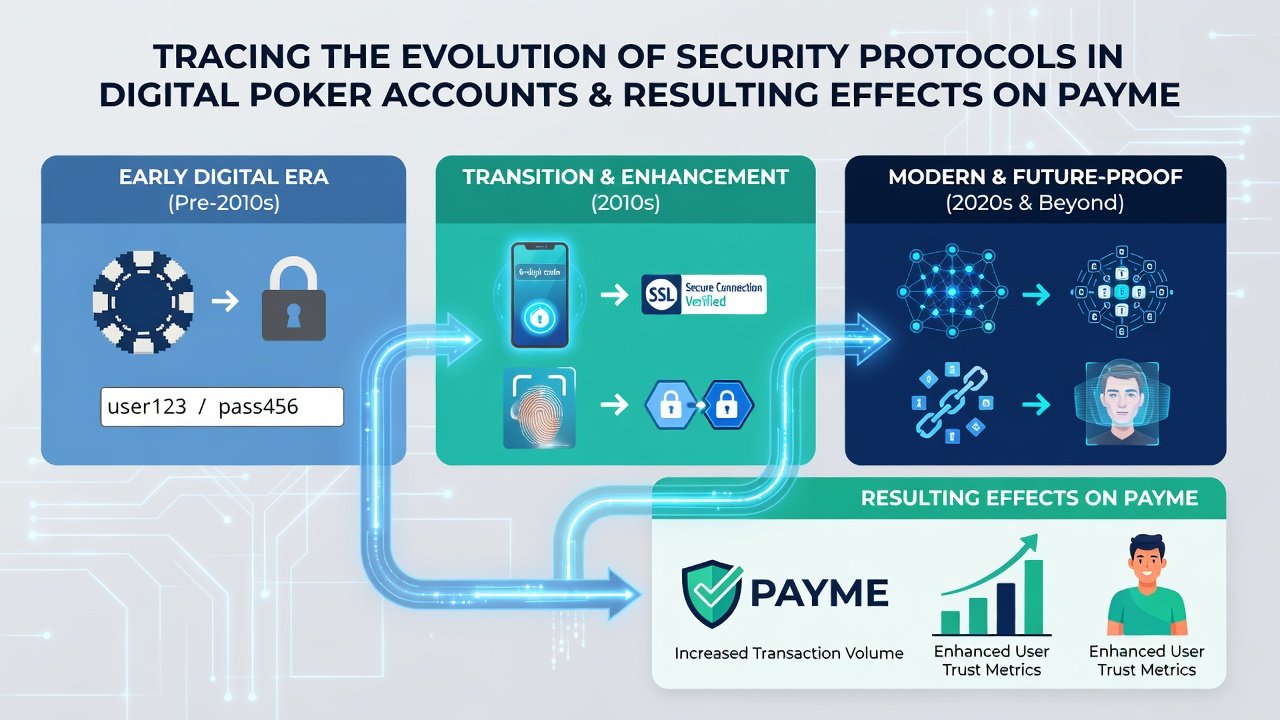
Transport Layer Security 1.3, ratified in 2018, reduced round-trip times during secure handshakes by eliminating legacy cipher suites, and several poker platforms completed migration by mid-2020. This shift shortened secure session establishment while maintaining forward secrecy, allowing payment gateways to process encrypted authorization messages more quickly than under previous versions. Researchers tracking transaction logs reported average processing speed improvements of 15 to 25 percent for deposits once full deployment occurred.
Behavioral analytics engines introduced around 2019 analyze mouse movements, typing rhythms, and device fingerprints in background processes to flag anomalies without interrupting user flows. These systems operate continuously yet insert conditional pauses only when risk scores exceed thresholds, which means routine payments continue without added delay while flagged transactions undergo manual review that can extend settlement from seconds to hours. In June 2026 several major operators expanded these engines to include device location cross-checks against historical patterns, producing further refinements in false-positive rates.
Regulatory Alignment and Cross-Border Payment Adjustments
Jurisdictions such as those overseen by the Malta Gaming Authority and the Nevada Gaming Control Board required enhanced know-your-customer procedures that linked account verification directly to payment rails. These linkages created sequential dependencies where identity confirmation must precede any fund movement, extending the time from request submission to final credit by an average of 30 to 90 seconds for new accounts. Established accounts with pre-verified profiles experience minimal additional latency because stored data bypasses repeated checks.
Studies published through the University of Nevada, Las Vegas Center for Gaming Research document that platforms adopting end-to-end encryption for all transaction metadata achieved compliance without proportional slowdowns once application programming interfaces were updated to handle parallel verification streams. The same reports indicate that withdrawal queues shortened noticeably after 2023 when operators synchronized security token refreshes with payment processor batch cycles rather than triggering them sequentially.
Current Performance Metrics and Platform Adaptations
Current benchmarks collected across multiple digital poker sites show deposit processing completing in under four seconds for 92 percent of verified transactions when Transport Layer Security 1.3 combines with hardware security modules for key management. Withdrawal speeds vary more widely because they incorporate additional anti-money laundering screening that scales with transaction size, yet median times have declined from 48 hours in 2017 to under 12 hours for amounts below regulatory reporting thresholds in 2026.
Operators that implemented real-time risk scoring integrated with payment gateways report fewer manual interventions, which directly correlates with reduced average handling times. One documented case involved a platform that moved from sequential to asynchronous verification calls, cutting the median withdrawal interval by 18 minutes while maintaining the same security certification level.
Conclusion
Security protocol evolution in digital poker accounts continues to balance stronger protections against incremental processing overhead, with measurable effects visible in payment timelines. Continued refinement of parallel processing techniques and regulatory synchronization suggests further compression of these intervals remains achievable without compromising verification integrity.