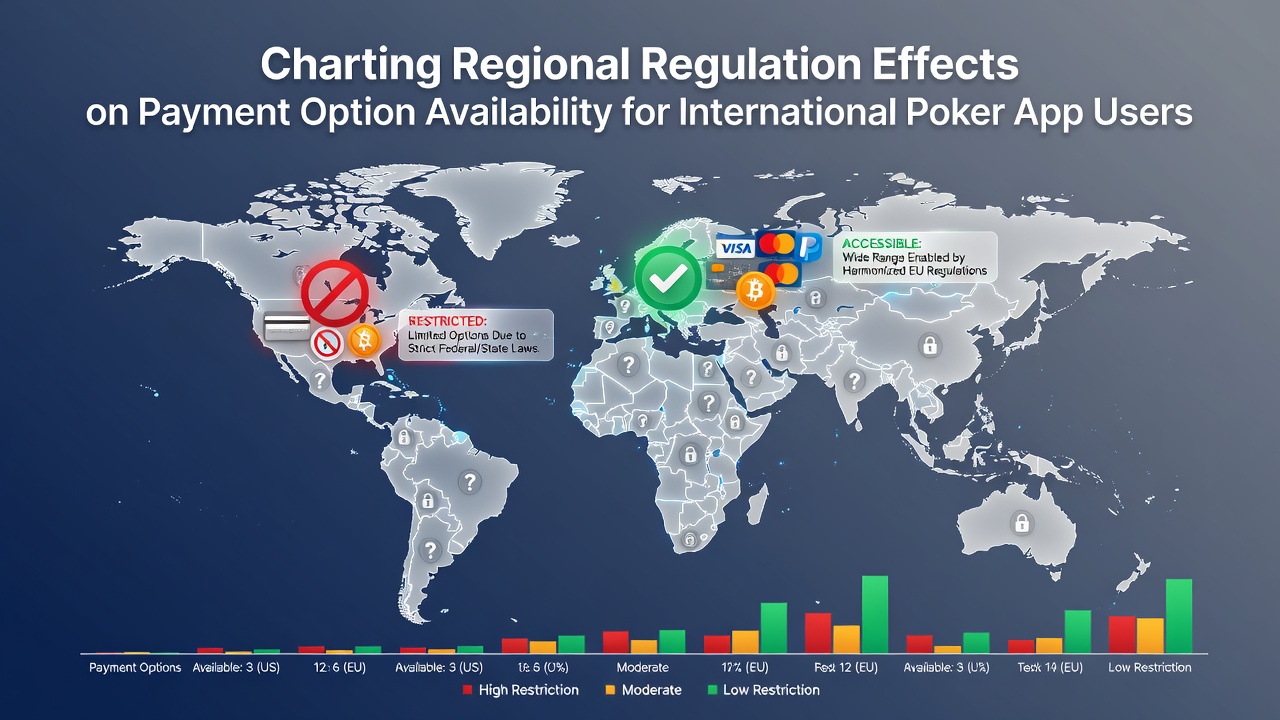
Charting Regional Regulation Effects on Payment Option Availability for International Poker App Users
Regional regulations continue to shape payment option availability for international poker app users, and observers note that these rules often determine which methods work across borders while creating gaps in access for players in certain jurisdictions. Data from mid-2026 shows that variations in licensing requirements, anti-money laundering standards, and cross-border transaction rules directly influence whether credit cards, e-wallets, bank transfers, or cryptocurrencies remain viable in different markets, and this pattern holds steady as platforms adjust their systems to stay compliant.
How Licensing Frameworks Influence Deposit Methods
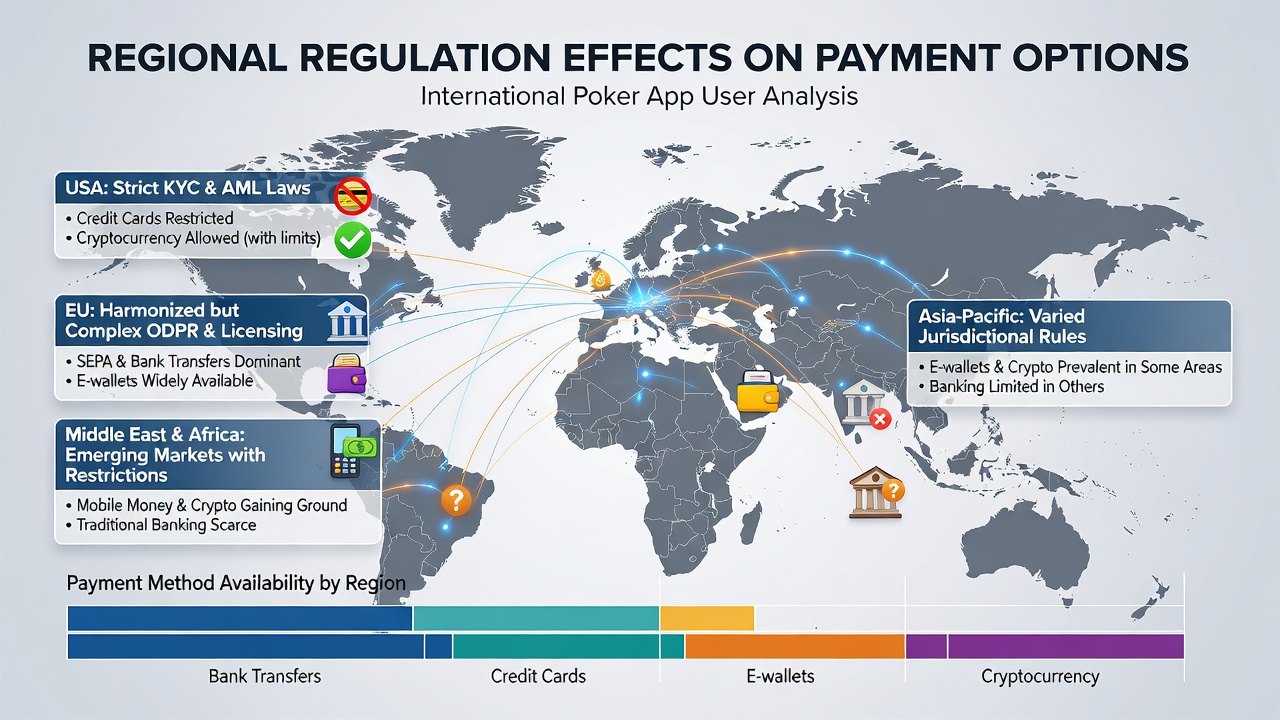
European Union member states apply the Payment Services Directive along with national gambling laws that require licensed operators to partner only with authorized financial institutions, which restricts some international users from using certain debit options depending on their home country. In contrast, several Asian jurisdictions impose outright prohibitions on foreign payment processors for online gaming, forcing app providers to limit available methods or route transactions through local intermediaries that meet strict capital requirements. Canadian provincial rules, updated through 2025 and still in effect during July 2026, allow broader e-wallet integration for residents yet block many offshore processors unless they hold specific provincial approvals, and this setup leaves international users navigating fragmented availability when they attempt deposits from multiple regions.
North American Variations and Their Reach
United States state-by-state frameworks create a patchwork where Nevada and New Jersey maintain tightly controlled lists of approved payment providers for poker apps, while other states with no legal online poker simply see no regulated options at all. Observers tracking activity in July 2026 report that users located outside these states often rely on virtual private networks or alternative accounts to access methods that would otherwise be unavailable, although such workarounds carry their own compliance risks under federal guidelines. Meanwhile, Mexican regulations on financial technology companies have tightened since 2024, resulting in fewer cross-border card transactions for poker platforms and pushing more users toward cryptocurrency gateways that operate under lighter oversight.
Asia-Pacific and Emerging Market Constraints
Australian authorities enforce the Interactive Gambling Act through financial institutions that must block transactions tied to unlicensed overseas operators, and this policy has led many poker apps to remove direct bank transfer support for Australian users while preserving cryptocurrency routes in limited cases. Research compiled by the Asia-Pacific Gaming Association indicates that similar restrictions in parts of Southeast Asia have reduced the number of accepted e-wallets by roughly 30 percent since 2023, with the sharpest declines appearing in markets where central banks prohibit foreign exchange for gaming purposes. Those tracking transaction data note that users in these regions increasingly encounter temporary holds or outright rejections when attempting deposits through conventional channels, which in turn shifts reliance toward stablecoin options that bypass some local banking controls.
Cryptocurrency Adoption as a Regulatory Response
Where traditional payment rails face blocks, cryptocurrency adoption has grown in jurisdictions that permit blockchain-based transfers for gaming activity. Figures from a 2025 industry report prepared by the International Betting Integrity Association reveal that poker apps saw a 22 percent rise in crypto deposit volume among international users between January and June 2026, driven largely by regulatory clarity in places such as Malta and certain Canadian provinces. Yet even here, rules differ, and some countries require operators to maintain detailed wallet screening procedures that slow processing times while others impose transaction size caps to limit exposure under anti-money laundering statutes.
Impact on Withdrawal Processing and User Access
Withdrawal availability often mirrors deposit restrictions but adds extra layers because regulators focus on preventing illicit fund movement. In regions with strict capital outflow rules, poker apps must verify that withdrawal requests comply with local tax and reporting requirements before releasing funds through any channel, which extends timelines for users located abroad. Data shared by the European Gaming and Betting Association shows that average withdrawal processing periods lengthened by up to 48 hours in several member states during the first half of 2026 as operators implemented enhanced verification steps tied to updated payment regulations.
Conclusion
Regional regulation effects on payment option availability remain a central factor for international poker app users, and the landscape continues to evolve through new licensing conditions, financial oversight measures, and technology-specific rules that appear across North America, Europe, and Asia-Pacific markets. Those monitoring developments in July 2026 observe that platforms respond by expanding or contracting supported methods according to each jurisdiction's current stance, while users must navigate these differences when selecting apps and transaction tools. Continued tracking of regulatory updates will likely reveal further shifts in which payment options stay accessible across borders.